Our Lady

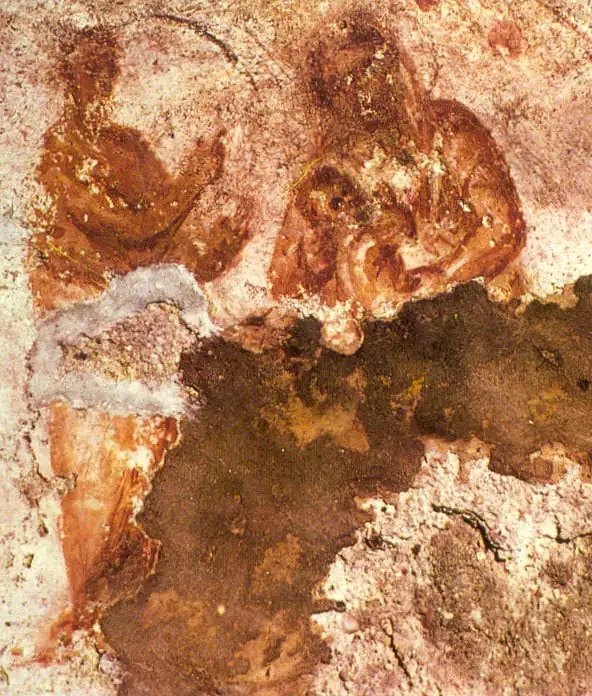
Here are a few random thoughts on Marian devotion from one committed to the cause... The whole Catholic Church, East and West, honours the Mother of the Lord, not only with hymns and images in her memory, but in prayers which ask for her intercession in communion with whole communio sanctorum. The Church renders honour to the Spotless Mother of the Word made flesh.
Orthodox devotion to the Blessed Virgin Mary is Christological, Christ-centred, for Mary is the one in whom God has assumed human nature and became incarnate, and all honour properly given to Mary is in recognition of the glory of her Divine Son, Jesus Christ, the Incarnate Word. Mary is 'the highly favoured one' or 'full of grace' because she possessed within her womb Grace Himself, the Person of God the Word, the Second Person of the Blessed Trinity made Man. There could be no more sublime a grace or virtue bestowed by God on any human being. As a result Mary is the most graced human person who has ever lived. And Mary co-operates with the divine will in freely accepting the offer of God to become the Theotokos, knowing all the difficulty, scandal, and pain that would attend such a choice.
Mary is the New and Second Eve, reversing the disobedience of the first Eve, because she was obedient to the will of God and freely consented to serve as the means by which God would become Man for our salvation: 'Behold the handmaid of the Lord: be it unto me according to thy word' (Saint Luke 1.38). Although the Greek participle κεχαριτωμένη (kecharitōmenē) used in honour of Mary may not be unique in the New Testament lexicon, it is still the highest possible expression of veneration and honour, and one cannot get around that fact so easily. The word of the Archangel Gabriel honours Mary as Mother of the Word incarnate, and so should we, following the Angel's example. Our Lady herself prophesies that her role as the Mother of God will place her in a unique and essential position in the economy of salvation, which position will be recognised by all Christians until the end of time: 'All generations shall call me blessed' (Saint Luke 1.48).
Marian veneration is a key aspect of the Gospel, for it points directly to the mystery of the Incarnation. As Saint Peter Julian Eymard says, 'those who do not honour the Mother will not adore the Son.' All generations of the Holy Catholic Church have called the Holy Virgin blessed because she was chosen out of all the women who have ever lived to be the one through whom God would assume human nature and become True Man and Redeemer. All Anglicans, in common with Catholics of every age and clime, have always honoured Our Lady as the agent of the Incarnation by reciting her Song, the Magnificat, with love and devotion at the Evening Office. Mary is not honoured or venerated, strictly, because of her own dignity, although she is the holiest and purest of saints and the chiefest of believers throughout salvation history - she is honoured because of her unique relationship to Jesus Christ. The highest and greatest title and dignity of the Blessed Virgin is that of Mother of God, Theotokos, or God-bearer. 'And whence is this to me, that the Mother of my Lord should come to me' (Saint Luke 1.43). ἡ μήτηρ τοῦ κυρίου μου — he Meter tou Kuriou mou.
Mary is the 'Birthgiver of God,' the one who gave true human birth to Him Who is God. Mary does not generate or originate the divine nature, but she does give human flesh to God. That Christological mystery is the supreme cause for the honour and veneration extended to Our Lady: but the honour so rendered passes to Jesus Christ, the Saviour of Mary Who enabled her soul to magnify the Lord and her spirit to rejoice. To fail to call Mary Mother of God and to honour her as such is to reject the divine revelation of Scripture and Tradition concerning the Incarnation.
If Mary is not the God-bearer, then her Son is not God made Man, but is some lesser reality. Mary as Theotokos is the touchstone of Christian orthodoxy, that is, the Church's Faith in Jesus Christ, One Divine Person with two full and complete natures human and divine. Marian veneration safeguards and secures the Christological orthodoxy of the Catholic Church. Churches and individuals that fail to offer proper honour and reverence to and for the person and role of the Blessed Virgin usually lose their grip on the truth of the Incarnation. Mary points always to Jesus, and devotion offered to her is devotion always offered to the wonder of the Incarnation, which is in turn always offered to the incarnate God: 'Whatsoever he saith unto you, do it' (Saint John 2.5).
Jesus Christ is God. Mary is His Mother. Therefore, Mary is Mother of God.
To refuse to call Mary Mother of God is to refuse to call Jesus Christ God, or so to separate the divine and human natures in Our Lord as to destroy the Incarnation. Nestorius of Constantinople refused to call Mary Mother of God because he believed, heretically, that Jesus Christ was two Persons in one body. He held that Our Lord was a God-possessed man, a saint, a human person named Jesus of Nazareth possessed by a divine Person, the Eternal Son.
And hence, Nestorians said Mary could not have given human nature to be assumed by God hypostatically, in Person, in a hypostatic or personal union. Protestants as a genre claim they accept the dogmatic decrees of Ephesus and Chalcedon, but individuals or groups wind up altering or rejecting them because of a practical refusal to pray and live in the light of the conciliar tradition. Lip service may be given to the Ecumenical Councils but in practice they are not applied to the faith and worship of their ecclesial bodies. It should be pointed out that the prayer of the Angelic Salutation, 'Hail Mary, Full of Grace,' is Holy Scripture: Saint Luke 1.28 and 1.42. Opposition to the advocation 'Hail Mary' is tantamount to opposition to the Word of God itself, for the phrase is purely scriptural.
The Church honours Our Lady but never adores her: a careful distinction must be made between dulia, service, veneration, and honour given to God's friends the Saints, which honour is relative and secondary, and adoration, worship, latria, which is only given to God alone. The Holy Virgin is given the highest form of relative honour, hyperdulia or super-honour. Only the divine nature receives divine worship. It does not and cannot distract from the love and worship of the Blessed Trinity rightly to honour and hold in esteem His greatest masterpiece and work of grace, the Mother of Jesus Christ. To love and honour the Mother of the Lord is to fulfil the Fifth Commandment: 'honour thy father and thy mother.' Mary is the Mother of the Church, the spiritual Mother of redeemed humanity: 'Son, behold thy Mother' (Saint John 19.27). Our Lady is the Mother of all the living in Christ, the Woman whose Seed has crushed the serpent's head (Genesis 3.15-20). She is worthy of our liturgical veneration, reverence, and respect.